Tulsa, OK

Dental implants in Tulsa

The closest thing to getting the tooth back. An implant is anchored into the jaw, so it does not move and it does not rely on the teeth beside it.

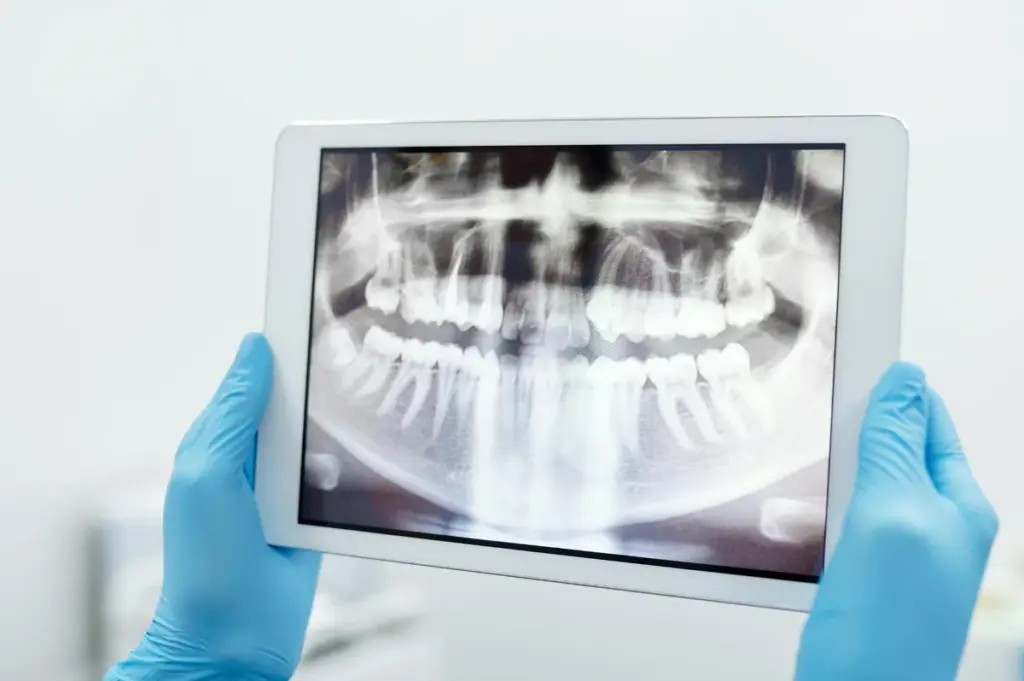
A gloved clinician holding a tablet showing a panoramic dental X-ray

A dental implant replaces a missing tooth from the root up. A titanium post is placed into the jawbone, the bone grows around it over the following months, and a crown made to match your other teeth is attached on top. The result is fixed in place. You brush it, floss it, and eat normally.

Why replacing a missing tooth matters

A gap is not only cosmetic. The teeth on either side drift toward the space, the opposing tooth drops down, and the bite changes over time. The jawbone in the empty area also shrinks, because the bone that held the root has nothing to do. Waiting years to fill a gap sometimes means bone grafting is needed before an implant can go in.

A gloved clinician holding a tablet showing a panoramic dental X-ray

How an implant compares to a bridge

A bridge fills the gap by cutting down the healthy teeth on both sides and using them as anchors. It is quicker and it is sometimes the right answer, particularly where those neighbouring teeth already need crowns.

An implant does not touch them. It also preserves the bone in the area, which a bridge does not. It takes longer because the bone has to fuse to the post. Dr. Hanna will go through which fits your mouth, your timeline, and your budget.

Not sure where to startCall and describe what is going on.

Call (918) 205-7458

The process

It begins with an exam and X-rays to check there is enough bone and to see where the nerve and sinus sit. The post is placed at a surgical appointment, and healing takes a few months while bone fuses to it. Then the abutment and the final crown go on, shaded to match your teeth.

Because Dr. Hanna completed a residency in sedation and oral surgery, surgical placement and the final restoration are both done in this office. You are not passed between a surgeon across town and a dentist here, and the person who plans the final crown is the person who positions the implant.
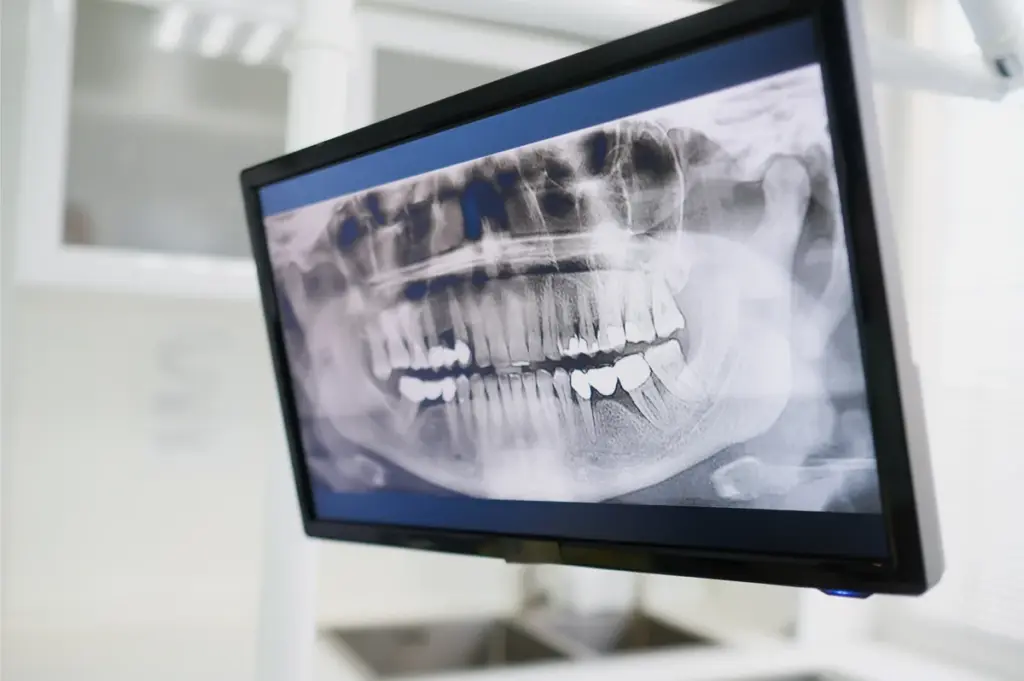
A panoramic dental X-ray displayed on a treatment room monitor

Implant supported dentures

Implants also stabilise a denture. A small number of implants gives a lower denture something to lock onto, which for most patients is the difference between a denture that shifts while eating and one that stays put. If you already wear a denture and find it moves, this is worth asking about.

What implants cost

An implant is priced in parts, because it is built in stages: the surgical placement of the post, the abutment that connects it, and the crown on top. Any preparatory work such as an extraction or a bone graft is separate again. A quote that gives you one number without saying which of those it covers is worth questioning.

Dental plans have historically been poor on implants, though more now contribute something. Where a plan excludes the implant itself it will sometimes still cover the crown, and where there is an annual maximum, staging treatment across two benefit years can make a real difference. Our team will work that out with you rather than leaving you to it.

Compared against a bridge, the implant usually costs more up front and less over a lifetime, because a bridge involves cutting down two healthy teeth and typically needs replacing at some point. You will get both figures.
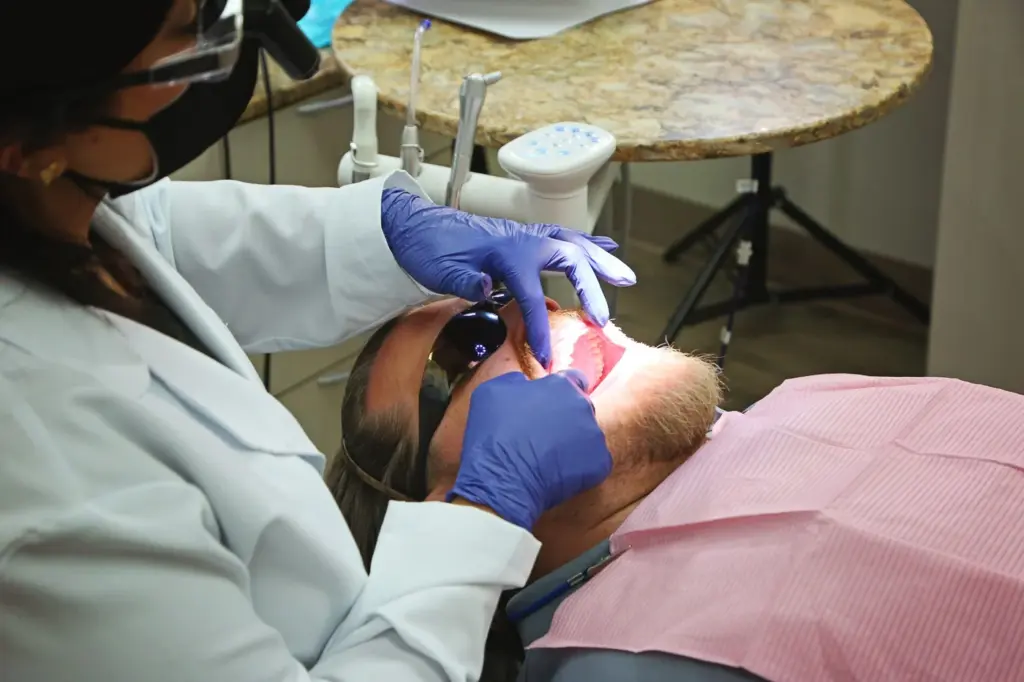
A close-up of treatment in progress at Diamond Dental in Tulsa

Looking after an implant

An implant cannot decay, which leads people to assume it needs less attention. The opposite is closer to the truth. What implants lose is bone, through an inflammatory condition called peri-implantitis that behaves much like gum disease and is driven by the same plaque at the gum line.

It is also quieter. A natural tooth has a ligament with a nerve supply that complains early. An implant is fused directly to bone with no ligament, so problems tend to be advanced before anything feels wrong. That is why implant patients get checked and cleaned on a regular recall rather than being signed off.

Day to day it is straightforward: brush as normal, clean underneath and around the crown properly, and keep up your recall. Smoking is the single biggest risk factor for implant failure, and grinding is the second, which is another reason a night guard often accompanies implant work.

Common questions

The questions patients ask us most about this treatment, answered plainly.

How long does a dental implant take

Several months from start to finish, because bone needs time to fuse to the post before the crown goes on. The appointments themselves are short. The waiting is healing time, and rushing it is what causes implants to fail.

Is getting an implant painful

The placement is done with the area numbed, and sedation is available. Most patients describe the recovery as easier than an extraction, with soreness for a few days that is managed with normal pain relief.

Can anyone get an implant

Most people can, but it depends on having enough healthy bone and on gum health. Uncontrolled gum disease, some medical conditions, and smoking all affect whether an implant will integrate. An exam and X-rays answer it for your case.

Book your appointment today

Call the office and we will find you a time that works.